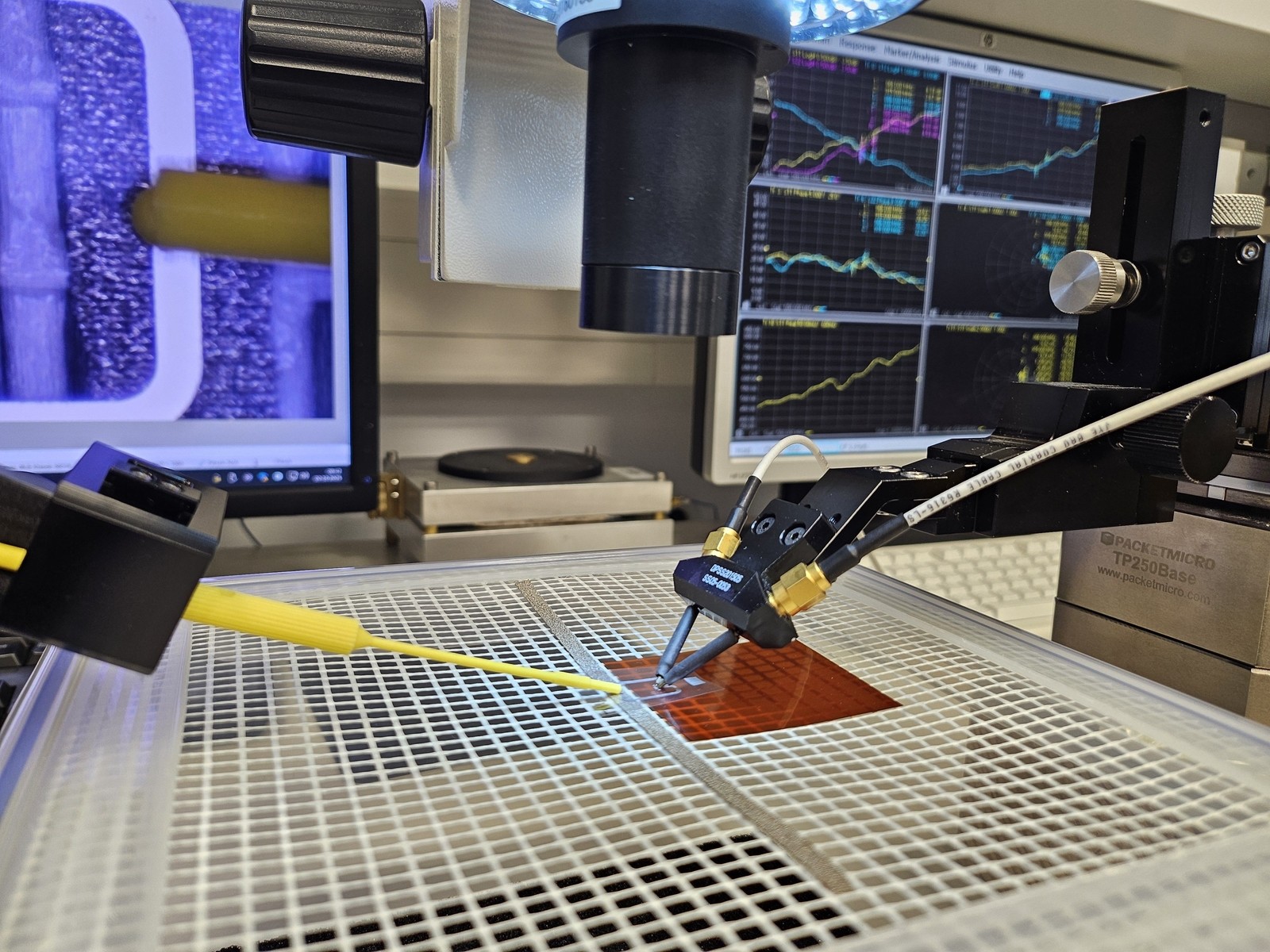

21 listopada 2025 r. w czasopiśmie Electronics (MNiSW 100 pkt., IF: 2.6) ukazała się publikacja, w której zawarto wyniki prac B+R+W dotyczące wpływu parametrów tkanin przewodzących na proces syntezy anten struktur tekstronicznych RFID pasma UHF:
Nizioł M., Jankowski-Mihułowicz P., Węglarski M.: Analysis of the Impact of Conductive Fabrics Parameters on Textronic UHF RFID Transponder Antennas, Electronics, Vol. 14, No. 23, 4552, 2025 (DOI: 10.3390/electronics14234552).
Prace ukierunkowano na praktyczne zastosowanie w obszarze koncepcji Cyfrowego Paszporcie Produktu (DPP - ang. Digital Product Passport) Unii Europejskiej. W tym kontekście do realizacji badań zdecydowano się wykorzystać powszechnie dostępne tkaniny przewodzące, z których można wytwarzać anteny na typowych liniach produkcyjnych branży tekstylnej, bez konieczności angażowania wyspecjalizowanej wiedzy inżynierskiej z zakresu techniki RFID.
Abstract:
Growing environmental awareness is resulting in new initiatives aimed at improving quality of life and minimizing the negative impact of manufactured goods on the environment. The European Union’s strategy to introduce a Digital Product Passport fits perfectly into this trend. According to current assumptions, the DPP will be based on QR codes or NFC technology, but the use of solutions operating in higher-frequency bands is worth considering. One such solution could be a UHF RFID tag. One of the sectors where the DPP will need to be used is the textile industry, and since the authors are conducting research on textronic RFID tags, they decided to test new solutions in this area, which could ultimately serve as a ready-made solution for the future. It was decided to use commonly available conductive fabrics, which can be successfully used to manufacture antennas on typical production lines in textile factories without the involvement of specialized RFID engineers. Since the effectiveness of the tag depends on the parameters of the antenna used, it is crucial to consider the impact of different fabrics on those parameters. As part of the article, the authors prepared model antenna samples made of various conductive fabrics, and then analyzed (through simulation and experimental studies) the effect of the fabrics used on the impedance of the model antenna. Obtained results confirm the thesis about the influence of different conductive fabrics on antenna parameters, especially in the case of the real part of the impedance. The final product (tag) works equally effectively regardless of the fabric used, but the impact of changes in its parameters is noticeable (read range values dispersion).